
IASS – Iasi Arts Summer School
ONE STEP FORWARD, TWO STEPS BACK: NIGHTMARES OF ARTISTIC INVESTIGATION
Critical Perspectives in Curatorial and Artistic Research
advanced lectures and open research workshops
Organized by: Doctoral School of Visual Arts @ UNAGE Iași (Romania)
Location: Faculty of Visual Arts and Design, Iași
Guest Lecturers:Anetta Mona Chișa, Markéta Dolejšová, Irina Gheorghe
Mediation by : Prof. Cătălin Gheorghe, curator and Director of the Doctoral School of Visual Arts at “George Enescu” National University of Arts in Iasi, Romania.
Financially supported by CNFIS grant: CNFIS-FDI-2026-F-1077
The school is open for free attendance, even for anyone engaged in the art community (living in or passing through Iași), not only for the doctoral students from UNAGE Iași.
The activities are neither streamed nor recorded.
For more info, please contact: catalin.gheorghe@unage.ro
www.facebook.com/iasiartssummerschool
PROGRAM OVERVIEW
Day 1 (August 31, 2026)
11:00 – 13:00
Lecture: Handbook of Artistic Investigation
Irina Gheorghe – visual artist and Head of LARGE – Artistic Research Department at AVU, Academy of Fine Arts in Prague,
Markéta Dolejšová – practice-based researcher, Head of Doctoral Research Department at AVU, Academy of Fine Arts in Prague,
Anetta Mona Chişa – visual artist and Vice-Rector for Internationalization and Research at AVU, Academy of Fine Arts in Prague.
13:00 – 15:00
Lunch Break
15:00 – 17:00
Workshop: The Assessment Collage
Day 2 (September 1, 2026)
11:00 – 13:00
Lecture Nightmares of the Interdisciplinary
13:00 – 15:00
Lunch Break
15:00 – 17:00
Workshop: Crossing Paths. Enacting Methods
Day 3 (September 2, 2026)
11:00 – 13:00
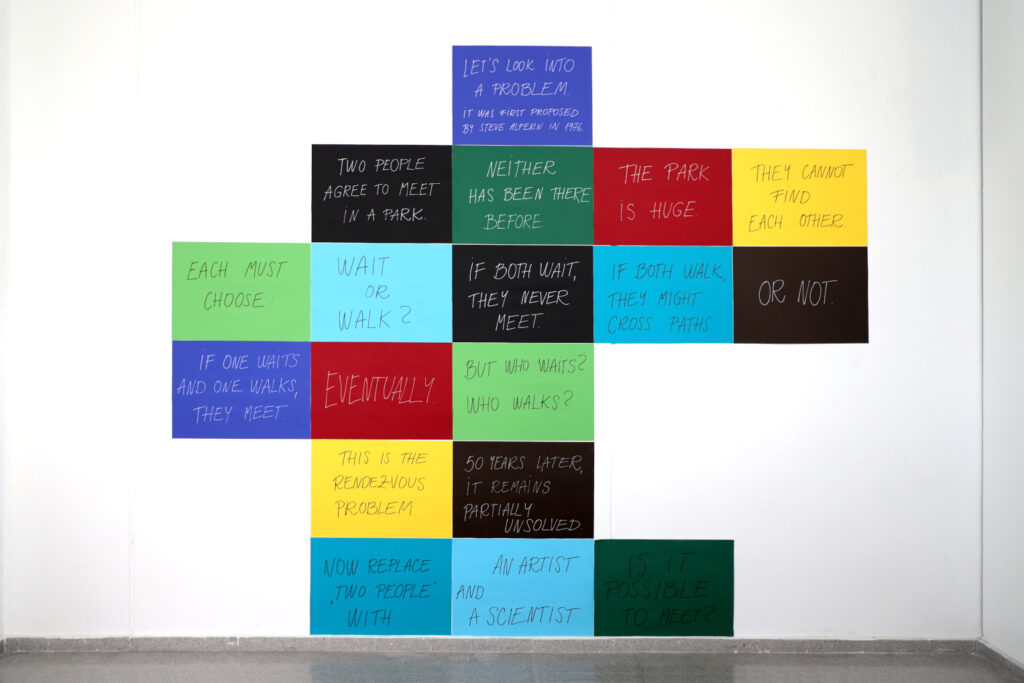
Advanced Lecture Rendezvous Problem
13:00 – 15:00
Lunch Break
15:00 – 17:00
Workshop: How to Use Your Eye
Argument
The current landscape of research in the arts can be navigated not only through the dreams of its underlying emancipatory premise—the “liberation” of art education and research (Henk Borgdorff)—but also through the nightmares of what gets lost in this ambitious enterprise. What is disconcerting in the reunion between art and research in the last decades and what possibilities are there to address it?
The alternative term of “artistic investigation” (proposed in the forthcoming Handbook of Artistic Investigation) works as a counterpoint to the increasing vagueness of the “artistic research” concept to indicate an inquiry centred around artistic practice. It also demands investigating the field of inquiry itself. What misdemeanour, then, is implied to warrant an artistic investigation?
One question that might be asked, adding to the initial provocation formulated above, is whether the crime that artistic research might in the end find itself responsible for is not one against art itself. Not because art cannot incorporate research, but, on the contrary, because it always has. The way it has done so, however, might to a large extent be incompatible with the form of its current “liberation”.
Across visual lectures, practical workshops, performative talks and site-specific presentations, the programme takes “one step forward, two steps back” as a working method: a deliberate retreat to look again at what the advance concealed. Day one asks how artistic research might be evaluated on its own terms, testing the Handbook and AVU’s own evaluation guidelines against practice. Day two turns to interdisciplinarity and to what happens when research methods, not only disciplines, cross into one another. Day three asks what remains legible when the meaning of language is expanded, returning attention to looking, drawing, and the difficulty of a rendezvous. Together, the three days test what moving forward in art and research might cost, and when moving back is the more productive step.

Location
Located in Iasi, the most northeastern city in Romania, only 20 kms far from the Eastern border of the European Union, The National University of Arts in Iasi is the oldest art academy in Romania.
Despite its peripheral location, Iasi is the former capital of the Kingdom of Moldavia, a city rich in history and with a rapidly evolving economy and cultural life. During the 2000s, it was the home of the first biennial of contemporary art from Romania, Periferic.